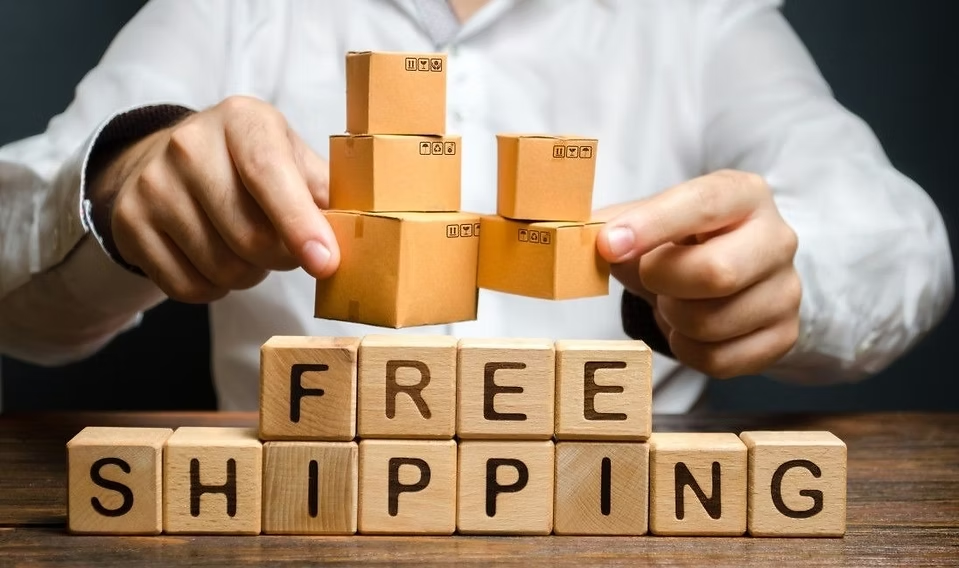
Free shipping began as an incentive and became an expectation. Now, a delivery charge at checkout can be enough to make a shopper reconsider.
DHL’s 2026 E-Commerce Trends Report, based on a survey of 29,000 shoppers across 29 countries, ranks free shipping as the top incentive for completing a purchase.
But the parcel still has to be picked, packed, and delivered, and someone pays for that.
So what does “free” actually cost, and can the business afford the promise?
Where the cost goes
A retailer can absorb delivery costs, build them into product prices, require a minimum spend, or include shipping in a paid membership. Each approach changes how the offer is funded.
For a small or mid-sized brand, the same shipping promise can produce very different results across orders. A compact, high-margin product may comfortably support free delivery. A bulky item sold at a discount may leave much less room.
Picking, packing, packaging, carrier charges, and applicable surcharges all need to be covered. If an order has to leave from two warehouses, there may be another parcel to pay for. If the customer sends something back, there is more work and expense.
The carrier still collects its agreed fee whether or not the customer paid for shipping. The retailer has chosen how to fund that fee and needs to know what’s left after doing so.
Rising fuel prices can push up delivery charges, while tariffs increase the landed cost of imported goods. Both leave less margin to fund free shipping.
Consider an illustrative order. A $60 sale at a 45% gross margin leaves $27 of gross profit. Picking, packing, and packaging cost $4, and the carrier charges $9. Outbound fulfillment costs $13, leaving $14 before marketing, payment fees, or overhead.
Now assume 20% of these orders are returned, with a full refund and an additional $12 per return for shipping and processing. If every returned item can be recovered at its full inventory value and resold without a markdown, the average contribution falls to $6.20 per original order. These are illustrative figures, not industry benchmarks.
A bigger basket needs a closer look
In a 2024 survey of 2,103 US consumers, FedEx and Morning Consult found that 81% were willing to spend more to qualify for free shipping.
That makes thresholds worth testing, but not every extra item improves the economics of the order.
The added product might carry a healthy margin and fit in the same parcel. It might also trigger a larger package, a second shipment, or a return. A threshold has to account for those costs, not just the lift in sales.
Customers make their own trade-off. Adding something they need can be good value. Adding something they would never otherwise buy means spending more to avoid a delivery charge.
The cost can continue after delivery
Free returns make the buying decision easier, especially when customers cannot judge fit or feel from a screen. They also extend the retailer’s financial exposure.
NRF and Happy Returns estimated that 19.3% of US online sales would be returned in 2025. This is the value of merchandise expected to come back, rather than the cost of processing those returns.
A returned item may need transport, inspection, repackaging, and restocking. While it is out of circulation, it cannot serve another customer. Depending on its condition and timing, it may also need a markdown.
The number to watch is what the business keeps after fulfillment and expected returns. Conversion rate and average order value can both rise while that number falls.
Free delivery does not always need to be the fastest
Customers are often happy to wait. A McKinsey study published in February 2025, drawing on a 2024 survey of more than 1,000 US consumers, found that more than 95% preferred free standard delivery to paid expedited delivery.
That supports offering free standard delivery alongside a paid express option. The savings only materialize if the longer delivery window lets the business use a cheaper service or consolidate shipments.
The standard option still has to be reliable. Customers who choose it need a delivery date they can trust. A date that keeps slipping erodes that trust quickly.
The environmental impact depends on how orders move
Free shipping alone does not tell us whether a delivery is environmentally efficient. Distance, transport mode, packaging, the number of parcels, and return trips all matter.
Consolidating an order into fewer parcels and delivery trips can reduce its footprint, depending on the distances and transport involved. A longer delivery window can create room to consolidate, but only if the operation uses that time.
Returns follow the same logic. Ordering several sizes and sending most of them back adds handling and transport. Better product information and sizing guidance can reduce uncertainty before the purchase.
As I write this article, I can’t help questioning my own expectations around free shipping.
I plan to be more intentional when I order: resist adding something I don’t need to reach a threshold, combine purchases where practical, and choose slower delivery when there’s no urgency.
I often argue that as technology advances, retailers, 3PLs, and carriers can reimagine traditional practices. Better inventory positioning and fewer split shipments can help reduce costs and avoidable journeys.
But technology alone won’t resolve every trade-off. Our expectations matter too.
The decision starts before checkout
By the time a customer sees “free shipping,” inventory decisions have already shaped what that promise will cost.
Is stock near the customers who are likely to buy it? Can one location fulfill the whole basket? Would moving inventory reduce delivery expense, or would the transfer and additional storage cost more than it saves?
Keeping stock closer to demand can help. Spreading it across more locations also ties up cash and can leave some sites overstocked while others run short.
A good starting point for operators is to break down orders by basket, product margin, destination, fulfillment location, and return rate. Then test thresholds and service options against the contribution those orders actually leave behind.
Timur Eligulashvili, a leading shipping and logistics consultant and Founder of SmallParcel.com, puts it this way:
“Everyone agrees free shipping isn’t free. The better question is how you fund it. Per Narvar data reported by the WSJ, average free shipping thresholds jumped to $103 in 2025 from $82 in 2023,[5] because brands are scrambling to cover rising costs. Don’t copy a competitor’s threshold. Track shipping cost as a percent of sales by order size and set the threshold where your margin holds. Then lower your cost to serve: negotiate your carrier agreement, add regional carriers so you have options, and position inventory closer to your customers. That’s how you keep offering free shipping without giving up margin.”
Five options worth testing:
- Set thresholds around margin. Use current landed product costs, including applicable tariffs, alongside fulfillment, fuel surcharges, and expected returns. Review the threshold when those costs change; a bigger basket still has to cover the delivery subsidy.
- Offer free standard delivery and paid express. Let customers decide when speed is worth paying for. Keep delivery dates clear, and confirm that the standard service actually costs less to fulfill.
- Position inventory closer to demand. Review where stock is held and whether one location can fulfill the whole basket. Weigh delivery savings against transfer costs, storage, and the cash tied up in extra stock.
- Make consolidated delivery an option. Where possible, let customers receive items together rather than in separate parcels. Explain any extra wait, and confirm that consolidation lowers total fulfillment cost.
- Show delivery charges early. For orders that can’t support free shipping, test a clear flat rate or a carrier-calculated charge. Show the total before checkout and measure the effect on conversion and margin.
There are certainly more strategies to explore. As delivery costs and customer expectations change, the ability to continuously adopt innovative shipping strategies will become a defining characteristic of industry leaders. Unfortunately, inaction is not an option for those who want to stay ahead.
Until retailers and service providers are willing to reimagine and embrace alternative choices, free shipping will remain an undeniably attractive proposition for consumers. But it is important to recognize that the cost is shared across the ecosystem.