Protect sales.
See where coverage may run out before supply arrives.

AI-enabled inventory planning for DTC brands
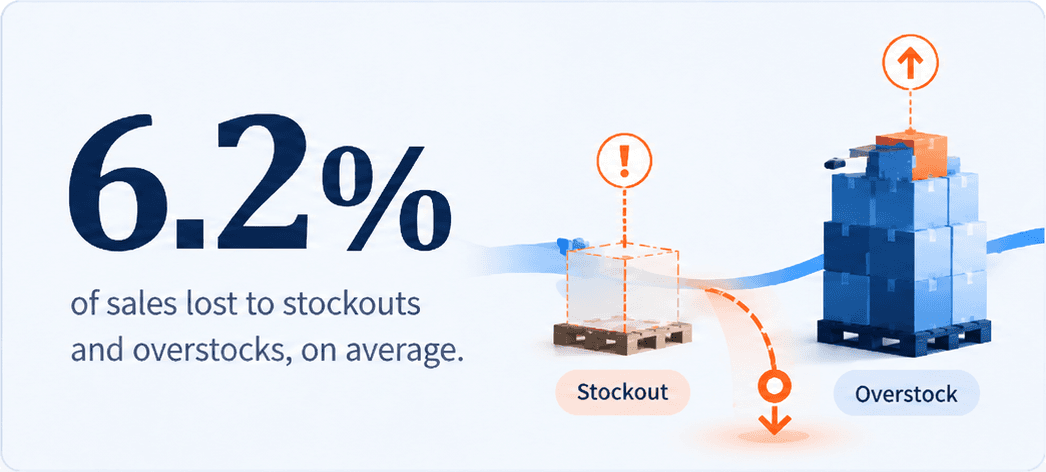
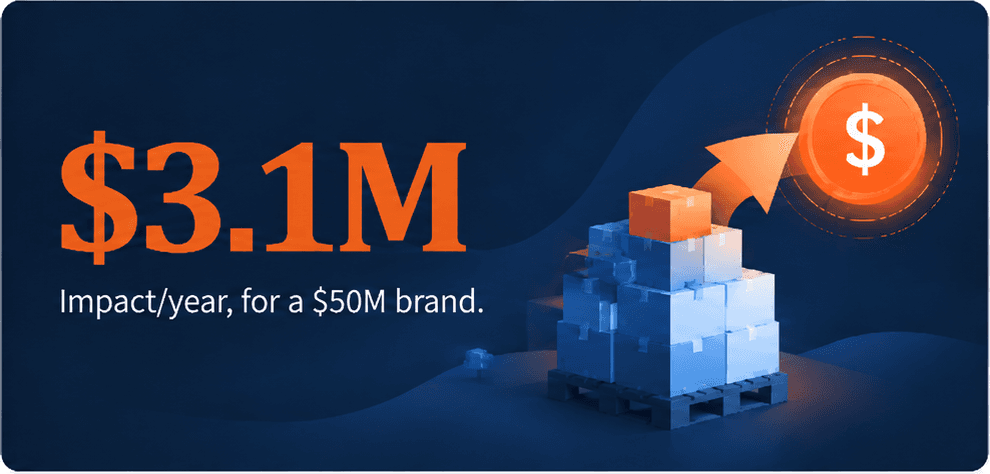
Across global retail, stockouts and overstocks cost about 6.2% of sales on average. DropSkip shows which inventory decisions protect your sales, cash, and margin first.
The inventory planning problem
Your ERP records purchases. Your WMS tracks physical stock. Your sales channels show where demand is moving. None alone can tell you whether inventory will meet demand at the right place and time.
See where coverage may run out before supply arrives.
Find inventory that exceeds the demand ahead.
Review inventory position before another PO or markdown.
From signals to decisions
DropSkip brings demand, supply, inventory, and operating constraints into one decision-ready view, so teams can move from visibility to action.
See the current and future inventory position across products and locations.
Understand what needs attention, why it matters, and what is driving it.
Compare what to buy, transfer, audit, reduce, or leave unchanged.
Adjust, approve, or dismiss the recommendation. Your team stays in control.
Inventory planning capabilities
Each view uses the same connected position to answer a different operational question.
Inventory and demand
Compare available and incoming inventory with expected demand. See where coverage is tightening while there is still time to act.
Location-level planning
You can have enough inventory overall and still run short where demand is strongest. Compare locations to see whether a transfer can resolve the gap.
Review what to order, how much, when, and where, with the reasoning visible before approval.
Protect availability without overbuying.Identify unexplained differences by SKU and location, then plan from the reconciled position.
Decide from inventory you can trust.Review purchasing, redistribution, and markdown options against the demand ahead.
Release cash before the problem grows.Product in action
Follow one SKU from a coverage gap to a recommended next move your team can inspect, adjust, approve, or dismiss.
Recommendation
The SKU has less coverage than the supplier lead time requires, and the recorded position contains an unexplained difference.
Works with your existing systems
Your ERP, WMS, 3PL, and commerce platforms keep recording and executing transactions. DropSkip connects their signals so your team can plan and decide across them.
No rip and replace. Connect in days.
Connection methods depend on your systems and integration environment.
Discuss your setupFrequently asked questions
Clear answers about where DropSkip fits, how the position stays current, and who controls the final action.
DropSkip uses AI to evaluate connected demand, inventory, incoming supply, lead times, locations, and operating constraints. It surfaces risks and recommends next moves with the reasoning visible, while operators keep control of the final decision.
Inventory management systems record and control what the business owns. DropSkip looks ahead across demand and supply to help the team decide what should be replenished, transferred, audited, reduced, or reviewed.
No. Those systems continue running transactions and execution. DropSkip connects their information to support planning and decision-making across them.
Yes. DropSkip can compare inventory, coverage, and expected demand across multiple warehouses, 3PLs, and fulfillment locations to surface location-level risks and possible replenishment, transfer, or allocation decisions.
DropSkip can use real-time and event-driven data from connected systems. The connection method depends on the systems and integration environment involved.
DropSkip surfaces the recommendation and its reasoning. Operators can inspect, adjust, approve, or dismiss the recommendation, keeping the final action under the team’s control.
Turn signals into decisions
Connect your demand, inventory, and purchasing information to see which decisions deserve attention across products, warehouses, and fulfillment locations.
Or email contact@dropskip.ai